
Did you know there’s a hidden train platform buried beneath a famous Manhattan hotel, built so a U.S. president could slip into the city without anyone noticing?
Or that one of New York’s most famous rivers can literally reverse direction depending on the time of day?
And deep in the forests of western New York, there’s a waterfall where a natural flame burns behind the falling water, fire and water somehow existing in the same place.
New York is famous for skyscrapers, Broadway, and the Statue of Liberty.
But beyond the headlines lies a state filled with ancient mountains, underground caves, secret tunnels, ghost towns, and natural phenomena that sound almost impossible.
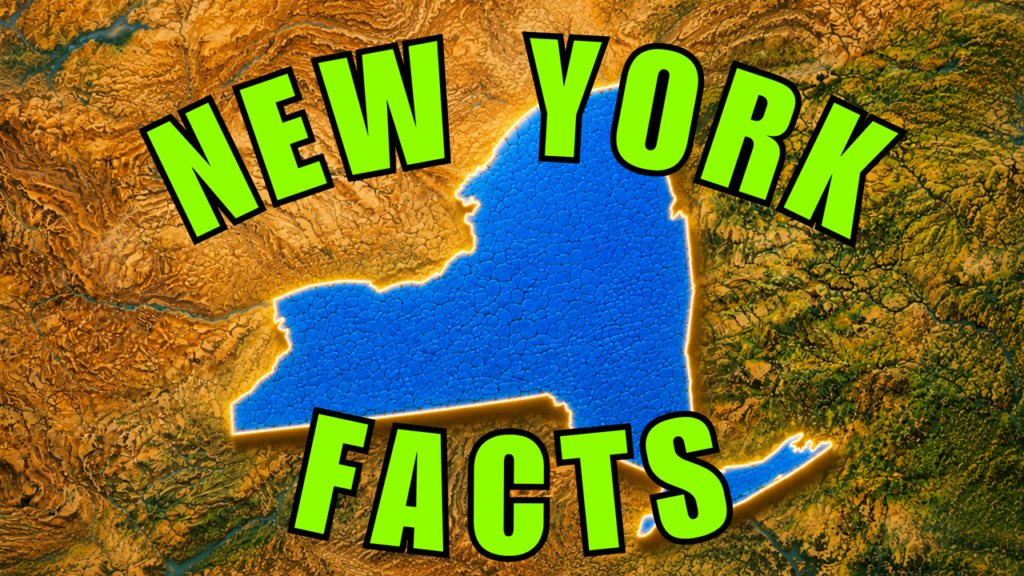
So today we’re counting down 40 of the most fascinating New York facts.
And trust me, some of these get strange.
Let’s start with number 40.
Fact 40: The Smallest Church in the World
Most churches are built to inspire awe through size.
This one does the exact opposite.
In Oneida, New York, the Cross Island Chapel measures just 3 feet by 6 feet, making it widely known as the smallest church in the world.
It’s barely bigger than a closet, just enough room for the officiant and the couple.
And yet, people really do get married there.
Which is kind of perfect, because it proves you don’t need a massive cathedral to create a memorable moment, just a tiny chapel and a story people will never forget.
Fact 39: The Barn With the World’s Largest Kaleidoscope
In the Catskills town of Mount Tremper, there’s an old barn that hides something wildly unexpected.
Inside is the World’s Largest Kaleidoscope.
Visitors walk in, lie on the floor, and look straight up as lights, mirrors, color, and music explode across the ceiling in huge shifting patterns.
It’s not just a roadside attraction, it’s a full sensory experience, part art installation and part optical illusion.
And the fact that people travel to a quiet corner of upstate New York just to stare into a giant kaleidoscope somehow makes it even better.
Fact 38: The State With 62 Counties… But Not Enough Cities
New York has 62 counties and 62 cities, which sounds way too neat to be true.
And in a way, it is.
Because even though the numbers match, not every county in New York actually has a city inside it.
Some counties are made up entirely of towns and villages, while others have major urban centers packed with people, traffic, and history.
So on paper, it looks balanced.
But once you zoom in, New York starts to reveal what it really is, not one state with one identity, but a patchwork of very different worlds stitched together under the same name.
Fact 37: The Ghost Towns Sleeping Beneath New York’s Water
In the 1950s, New York City had a problem.
It was growing faster than its water supply could keep up.
So engineers looked at a map.
Found a valley in the Catskill Mountains.
And made a decision that would erase four towns from the face of the earth.
Not from neglect.
Not from disaster.
By design.
The towns of Arena, Shavertown, Pepacton and Union Grove had existed for generations.
Farms.
Churches.
Schools.
Cemeteries.
Communities built over centuries by families who had no intention of leaving.
They didn’t get a choice.
The state exercised eminent domain.
Residents were told to pack their belongings.
Homes were demolished.
Graves were relocated.
And then the valley was flooded.
The Pepacton Reservoir now stretches nearly thirteen miles across the Delaware County landscape, one of the largest reservoirs in the entire New York City water system.
Holding over 140 billion gallons of water.
On dry years, when the water level drops, things begin to appear.
Roads.
Foundations.
Stone walls.
Four towns, still there.
Just underwater.
Fact 36: The Law About Wearing Slippers After 10 PM
New York City’s law books contain some strange leftovers from the past.
One of the more bizarre examples is an old rule that allegedly makes it illegal to wear slippers in public after 10 PM.
The law dates back to a time when city officials tried to regulate behavior in public spaces much more aggressively.
Today it’s basically forgotten and never enforced.
But technically speaking, if you’re wandering the streets of New York late at night in slippers… you might be breaking the law.
Fact 35: The Airport Built on Garbage
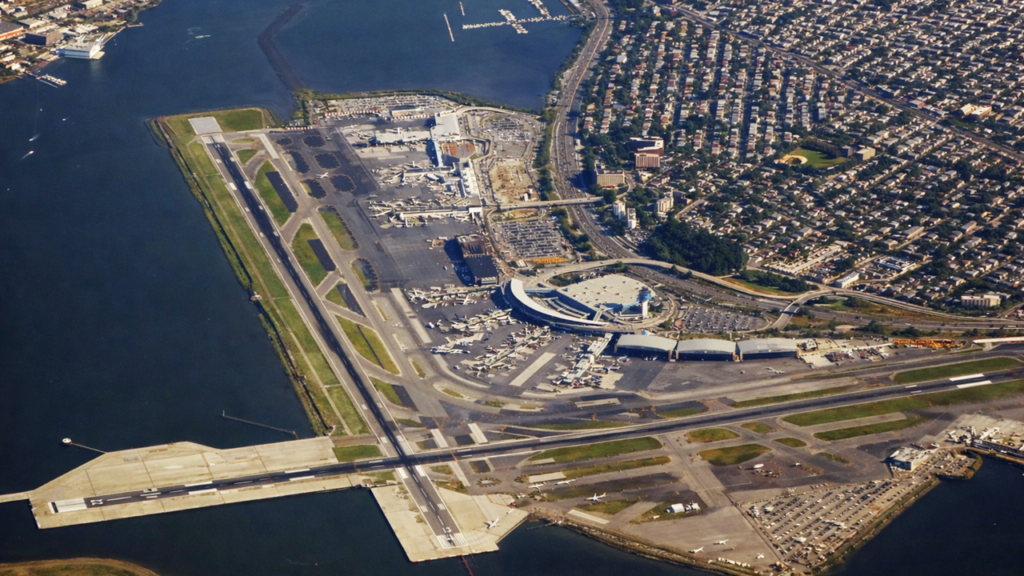
When planes land at LaGuardia Airport, most passengers don’t realize what lies beneath the runway.
Before the airport existed, the area was made up of tidal wetlands and garbage dumps along the edge of the East River.
In the 1930s, workers filled in the swampy ground with layers of landfill and debris to create solid ground for construction.
So when you fly into LaGuardia today, your plane is technically landing on land that was once a giant trash dump.
Not exactly the glamorous arrival people imagine when they think of New York City.
Fact 34: The Skyscraper View That Shows Five States
Standing on the observation deck of the Empire State Building already feels surreal.
The city stretches endlessly in every direction, skyscrapers fading into the horizon.
But on a clear day, the view goes much farther than most people realize.
From the 86th and 102nd floors, you can see parts of five different states: New York, New Jersey, Pennsylvania, Connecticut, and Massachusetts.
It’s one of the few places in the country where a single glance across the landscape crosses that many state lines.
And somehow, it makes the world feel both enormous and surprisingly connected at the same time.
Fact 33: The Train Station That Returns Lost Items
Grand Central Terminal feels like controlled chaos. Nearly three-quarters of a million people pass through it every single day, rushing for trains, coffee, meetings, and the exits.
With that many people moving through the building, you’d expect anything dropped on the floor to disappear forever.
But strangely, the opposite often happens.
Grand Central’s Lost and Found returns about 54% of all items that get turned in, and nearly 80% of high-value items like phones, wallets, and laptops.
In one of the busiest transit hubs on the planet, there’s a surprisingly good chance that if you lose something there… you might actually get it back.
Fact 32: The Town That Keeps Shrinking
When Rye, New York was first settled in the 1600s, it was enormous.
It stretched across a vast stretch of Westchester County, a sprawling township that contained what would eventually become multiple separate towns and cities.
Over the centuries, pieces kept breaking off.
Port Chester.
Harrison.
Greenwich.
Mamaroneck.
One by one, communities that were once part of Rye decided they’d rather be somewhere else.
And Rye kept shrinking.
Today the City of Rye covers just 20 square miles.
But here’s the part most people don’t know.
Of those 20 square miles, less than 6 are actually land.
The rest is water.
Coastal water.
Bays.
Inlets.
The edge of Long Island Sound cutting into the city’s boundaries in every direction.
Which means that technically, most of the City of Rye doesn’t exist beneath your feet, but underwater.
Fact 31: The City With Wild Coyotes
For most of the 20th century, coyotes were creatures of open plains and rural forests.
But over the past few decades, they’ve quietly adapted to something unexpected: New York City.
Sightings first started appearing in the Bronx, then slowly spread across the boroughs as coyotes followed green corridors, rail lines, and parks into the urban landscape.
Today they’ve been spotted in all five boroughs, including Manhattan.
Which means somewhere between the taxis, skyscrapers, and subway tunnels… wild predators have figured out how to live in one of the busiest cities on Earth.
Fact 30: The Snow Capital of the Northeast
If you think winters are rough, try living in Syracuse.
Thanks to its location near Lake Ontario, the city gets hammered by lake-effect snow when cold air sweeps across the relatively warmer lake and dumps moisture onto the land.
The result is staggering snowfall totals, about 124 inches per year on average.
That’s more than ten feet of snow annually.
And back in 1992? The city was hammered with 16 feet of snow.
In Syracuse, winter isn’t just a season.
It’s practically a personality trait.
Fact 29: The River That Came Back From the Dead
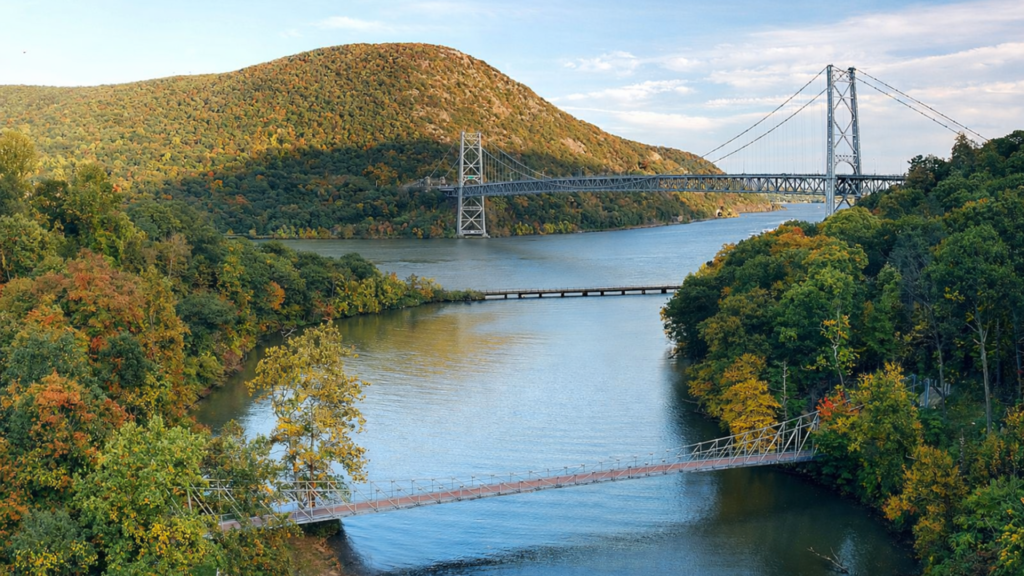
The Hudson River runs about 315 miles from the Adirondacks all the way down to New York Harbor, cutting straight through the heart of the state.
But by the mid-1900s, it had a reputation as one of the most polluted rivers in America.
Decades of industrial dumping, sewage, and chemical waste had turned large stretches of it into what many people considered a dead river.
Then something surprising happened.
Environmental activism, stricter regulations, and massive cleanup efforts slowly brought it back to life.
Today striped bass, Atlantic sturgeon, and even occasional seals are found swimming through waters that once looked beyond saving.
It’s one of the most dramatic environmental recoveries in the country.
Fact 28: The Island That Sits in the Wrong State’s Water
When people think of the Statue of Liberty, they picture New York.
After all, it’s one of the most famous landmarks in the city.
But geographically, things are a little strange.
Liberty Island actually sits completely inside waters that belong to New Jersey.
Despite that, the island itself is legally part of New York due to a historical agreement between the two states.
So when you visit Lady Liberty, you’re standing on New York land… surrounded entirely by New Jersey water.
Fact 27: The Thousand Islands Border Puzzle
Where the St. Lawrence River flows out of Lake Ontario, the water breaks into a maze of islands known as the Thousand Islands.
There are actually more than 1,800 of them scattered across the river.
When the United States and Canada established the border here in the 1800s, officials had to determine ownership island by island.
Some islands are large enough for mansions and castles.
Others are barely big enough for a single tree.
It’s one of the most intricate and unusual borders in North America.
Fact 26: The Border Dispute That Lasted Until 2001
Lake Champlain forms part of the border between New York and Vermont, stretching more than 100 miles through the northern part of the state.
But for most of American history, nobody was completely sure where the exact dividing line in the lake actually was.
Disagreements over navigation rights, fishing areas, and historical surveys left the boundary unclear for decades.
It wasn’t until 2001 that the two states finally settled the precise border through a formal agreement.
Which means a body of water that had been separating states since the 1700s didn’t officially get its final line until the 21st century.
Fact 25: The River That Drains an Entire Region
When people think of rivers that drain huge regions, they usually picture something massive like the Mississippi.
But in New York, a river only about 24 miles long does the same job.
The Oswego River carries water from the entire Finger Lakes system into Lake Ontario.
All those long glacial lakes eventually funnel their water through this relatively short stretch of river.
It’s a reminder that sometimes small geographic features end up doing surprisingly big jobs.
Fact 24: The Plateau Pretending to Be Mountains
At first glance, the Catskills look exactly like a mountain range.
Rolling peaks, forested ridges, and winding valleys make them feel like classic Appalachian mountains.
But geologists see something completely different.
The Catskills are actually a dissected plateau, a huge elevated block of land that rivers slowly carved into peaks and valleys over millions of years.
In other words, they only look like mountains because erosion sculpted them that way.
Nature basically carved a giant plateau into something that resembles a mountain range.
Fact 23: The Stone Wall That Runs Across the Landscape
Driving through parts of Albany County, you might notice something strange along the horizon, a long, steep wall of rock cutting across the landscape.
This is the Helderberg Escarpment.
It rises roughly 400 feet above the surrounding terrain and stretches for miles, formed from ancient limestone layers that hardened hundreds of millions of years ago.
From certain angles it almost looks man-made, like a massive stone barrier built across the countryside.
But it’s actually the exposed edge of a giant geological layer slowly revealed by erosion over time.
Fact 22: The Lakes Carved by Ice
Across central New York stretches a group of long, narrow lakes known as the Finger Lakes.
Seen from above, they look exactly like the name suggests, giant fingers reaching across the landscape.
These lakes were carved thousands of years ago when massive glaciers gouged deep valleys into the rock during the last Ice Age.
When the glaciers melted, the valleys filled with water, creating lakes that in some places reach depths of more than 600 feet.
Today they’re famous for wineries, scenery, and deep blue water that hides an ancient glacial past.
Fact 21: The Cave With an Underground River
About 40 miles west of Albany lies one of New York’s most unexpected landscapes, hidden underground.
Howe Caverns formed roughly six million years ago as acidic water slowly dissolved the limestone beneath the surface.
Visitors descend about 150 feet below ground into vast stone chambers filled with stalactites, winding passages, and echoing caverns carved over millions of years.
The highlight comes when you step onto a small boat and float along a quiet underground river through the cave system.
It’s like drifting through a secret world that’s been hiding beneath New York the entire time.
Fact 20: The Cave With a Hidden Waterfall
Not far from Howe Caverns lies another underground world that many visitors stumble upon almost by accident.
It’s called Secret Caverns, and unlike its more famous neighbor, it leans fully into its mysterious name.
After descending a long staircase into the cave, visitors eventually reach the main attraction, a roaring 100-foot underground waterfall crashing through the rock.
The sound echoes through the cavern while cool mist fills the air.
Standing beside it feels surreal, like discovering a hidden natural landmark that somehow ended up buried beneath the earth.
Fact 19: The Waterfall Taller Than Niagara
When people think of waterfalls in New York, they almost always picture Niagara Falls.
But surprisingly, Niagara doesn’t hold the record for height in the state.
That title belongs to Taughannock Falls near Ithaca, where water plunges 215 feet straight down a narrow rock cliff.
That makes it about 33 feet taller than Niagara.
Instead of spreading wide like Niagara’s thunderous curtain of water, Taughannock drops in one dramatic vertical plunge, creating a towering column of mist and sound that feels almost impossibly tall.
Fact 18: The “Grand Canyon of the East”
In western New York, the Genesee River slices through a dramatic gorge known as Letchworth State Park.
Towering cliffs rise up to 600 feet above the river, forming what many people call the “Grand Canyon of the East.”
Three massive waterfalls crash through the canyon, sending mist drifting across forested cliffs and deep stone walls carved by thousands of years of rushing water.
Hot air balloons often float above the gorge at sunrise, giving visitors one of the most breathtaking views in the entire state.
It’s one of New York’s most spectacular landscapes, and somehow still one of its best-kept secrets.
Fact 17: The Mountains Older Than Civilization
The Adirondack Mountains in northern New York may not be the tallest in America, but they are among the oldest.
Some of the rock that forms these mountains dates back more than one billion years.
That means these formations existed long before dinosaurs, before plants covered the land, and long before humans ever appeared.
Standing on one of these peaks isn’t just a hike through nature.
It’s a moment on top of geological history that stretches back almost unimaginably far.
And somehow, these ancient mountains are still changing.
Fact 16: The Mountains That Are Still Rising
Most mountain ranges slowly shrink over time as wind, water, and erosion wear them down.
But the Adirondacks are doing the opposite.
The region is still rising about two to three millimeters per year because of something called post-glacial rebound.
During the last Ice Age, massive glaciers pressed down on the land with incredible weight. When the ice melted, the ground began slowly lifting back up.
It’s happening so gradually that we don’t notice it day to day.
But technically speaking, the Adirondacks are still climbing toward the sky.
Fact 15: The Secret Train Beneath a Manhattan Hotel
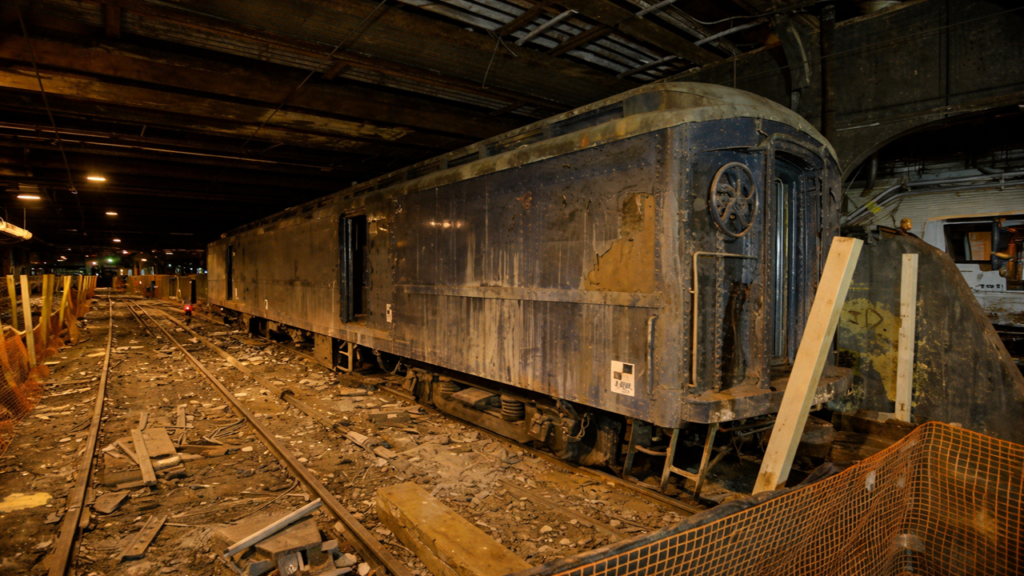
Beneath the Waldorf Astoria hotel in Manhattan lies a hidden piece of New York history.
It’s known as Track 61, a private train platform connected to Grand Central Terminal.
The track allowed President Franklin D. Roosevelt to arrive in the city discreetly, avoiding public attention and the challenges his mobility issues might have caused.
His train could pull in underground, and an elevator would carry his armored car directly up to street level.
Today the platform still exists, quietly sitting beneath one of the most famous hotels in the city.
Fact 14: The City With 700 Languages
Walk down a single street in New York City and you might hear English, Spanish, Mandarin, Russian, Arabic, Korean, and dozens of other languages.
In total, more than 700 languages are spoken across the city.
That makes New York the most linguistically diverse place on Earth.
Entire neighborhoods often reflect the cultures of immigrants who settled there over generations.
In many ways, the city functions like a miniature version of the world itself, compressed into one enormous urban landscape.
Fact 13: The First Capital of the United States
Before Washington, D.C., before the Capitol dome, before the federal government had a permanent home… there was New York City.
From 1785 to 1790, it served as the first capital of the United States.
That wasn’t random.
At the time, New York was one of the young nation’s most important commercial hubs, and its location made it a practical meeting point between northern and southern states.
It was energetic, influential, and already felt like a place where power gathered.
George Washington even took the first presidential oath of office there.
So before New York became America’s financial capital, it briefly held something even bigger: the capital of the entire country.
Fact 12: The First Pizzeria in America
Today, pizza is everywhere in America.
But the first licensed pizzeria in the country opened in New York City in 1905.
Lombardi’s began serving coal-fired pies in Manhattan’s Little Italy, bringing a taste of Naples to a rapidly growing immigrant neighborhood.
Customers lined up for the simple combination of dough, tomato sauce, and cheese cooked in blazing hot ovens.
More than a century later, Lombardi’s is still there, quietly holding the title as the place where America’s pizza obsession began.
Fact 11: The Music That Changed the World
New York City hasn’t just shaped finance, fashion, and film.
It has helped reshape music across the entire planet.
In a gritty Bowery bar called CBGB, punk bands like the Ramones and Talking Heads built a sound that would influence rock for decades.
A few miles away, Studio 54 turned disco into a global cultural explosion.
And in the Bronx during the 1970s, DJs experimenting with turntables and beats laid the foundation for hip hop.
Three very different sounds, born in the same city, each spreading across the world in its own way.
Fact 10: The Waterway That Built an Empire
Before the Erie Canal existed, moving goods across New York was slow, expensive, and incredibly difficult.
Farmers and traders had to haul products over rough roads and mountains, which made shipping costs skyrocket.
When the Erie Canal opened in 1825, it completely changed the game.
The cost of shipping a ton of goods from Buffalo to New York City dropped from around 100 dollars to about 5 dollars.
Almost overnight, New York became the most important trade route in the country, turning the state into an economic powerhouse.
Fact 9: The Largest Cash Heist in American History

Late on a cold night in December 1978, a group of criminals pulled off one of the most daring robberies in American history.
Inside a cargo building at JFK Airport, they targeted a Lufthansa vault where international cash shipments were stored before being transported around the world.
When the robbery was over, the thieves had walked away with roughly 5 to 6 million dollars in cash and jewelry, the largest cash heist in U.S. history at the time.
The crime later became legendary, partly because many of the people involved mysteriously disappeared in the months that followed.
If the story sounds familiar, that’s because it helped inspire one of the most famous scenes in the movie Goodfellas.
Fact 8: The House With 22 Ghosts
On a quiet street in Manhattan’s Greenwich Village stands a brownstone known as the House of Death.
The building at 14 West 10th Street has been linked to more than twenty reported ghost sightings over the years.
Even famous writer Mark Twain lived there for a time.
Residents and visitors have described strange footsteps, unexplained noises, and figures appearing in windows.
Whether you believe in ghosts or not, the house has earned a reputation as one of the most haunted addresses in New York City.
Fact 7: The Subway Stations That Disappeared
New York’s subway system is one of the largest in the world, with hundreds of stations carrying millions of riders every day.
But hidden within that network are more than 180 stations that no longer serve passengers.
Some were closed when routes changed.
Others became obsolete as the city evolved.
One of the most famous is the original City Hall station, a beautifully designed underground space with curved tile ceilings and skylights that once welcomed riders at the turn of the 20th century.
Today, trains still pass through it quietly, giving commuters a brief glimpse of a forgotten piece of the subway’s history.
Fact 6: The City With Millions of Rats
New York City is home to more than eight million people.
But it also has millions of other residents that most people would rather not think about.
Estimates suggest the city has around three million rats living in its tunnels, alleyways, sewers, and subway systems.
They thrive on the endless supply of food and shelter that a massive city provides.
Which means that somewhere beneath the streets of New York, an entire shadow ecosystem is living its own version of city life.
Fact 5: The Rock Formation That Stretches Across the Country
Running across western New York is a massive rock formation called the Niagara Escarpment.
It’s a long limestone ridge that stretches hundreds of miles, from New York through Canada and all the way to Wisconsin.
Niagara Falls exists because the Niagara River cuts across this ancient cliff, creating one of the most famous waterfalls in the world.
But the escarpment itself is the real geological giant.
It’s the backbone of the landscape, shaping rivers, cliffs, and entire regions for hundreds of millions of years.
And it reminds us that long before cities, highways, or borders, the forces shaping New York were already at work deep beneath the surface.
Fact 4: The Waterfall That’s Slowly Moving
Niagara Falls looks permanent, like it’s been frozen in the same place forever.
But the truth is, it’s slowly migrating upstream.
The relentless force of the water erodes the rock beneath the falls, causing the edge to retreat a little farther back each year.
On average, the falls move about one foot upstream annually.
Which means the Niagara Falls we see today isn’t where it was centuries ago, and centuries from now, it will be somewhere else entirely.
Fact 3: The Fire Burning Behind a Waterfall
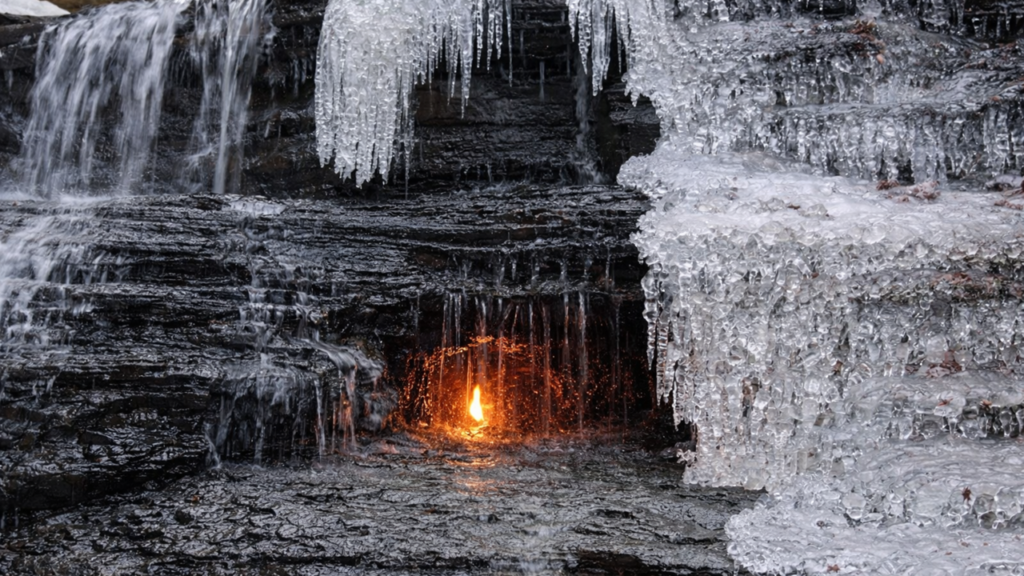
Deep inside Chestnut Ridge Park near Buffalo, there’s a waterfall that hides something almost impossible.
Behind the falling water of Eternal Flame Falls, a small flame burns inside a rocky alcove.
Natural gas seeps out of cracks in the shale beneath the waterfall, and when it ignites, the flame can continue burning behind the curtain of water.
It’s one of the only places in the world where fire and water appear together like this.
And somehow, the flame keeps flickering even as the waterfall crashes down in front of it.
Fact 2: The Park Bigger Than Four National Parks Combined
When people think of America’s biggest wilderness areas, they usually picture the West.
Yellowstone.
Yosemite.
Glacier.
The Grand Canyon.
But in northern New York, Adirondack Park quietly dwarfs them all.
At more than 6 million acres, it’s larger than those four national parks combined.
And what makes it even stranger is that people actually live inside it.
There are towns, roads, lakes, forests, and mountains all woven into one enormous protected landscape, making it feel less like a park, and more like an entire world hiding in plain sight.
Fact 1: The River That Flows Both Directions
Most rivers follow a simple rule: they flow downhill in one direction until they reach the ocean.
But the Hudson River doesn’t always follow that rule.
Because it’s a tidal estuary, the Atlantic Ocean actually pushes water upstream during high tide.
When the tide shifts, gravity takes over and the river begins flowing south again.
That means the current in the Hudson can literally reverse direction twice a day.
Stand along the river long enough, and you can actually watch the water change its mind about which way it’s going.
Wrapping Up
So there you have it.
New York is a state of ancient mountains, underground rivers, secret train platforms, disappearing waterfalls, and flames burning behind falling water.
New York isn’t just big in population.
It’s big in stories.
It’s a place where rivers change direction, cities hide entire worlds beneath their streets, and landscapes shaped by ice and fire still surprise the people who live there.
And the deeper you explore it, from the streets of Manhattan to the forests of the Adirondacks, the more unexpected it becomes.
Thanks for watching, if you learned something new, hit like and subscribe for more deep dives into the places that make America fascinating.
And if you’re from New York, drop a comment and tell us what we missed, because if there’s one thing we know for sure, it’s that New York always has more stories to tell.
- Read now: Check out these wild Pennsylvania facts
- Read now: Discover these unbelievable Colorado facts
