
Did you know Pennsylvania only has one town?
Or that the state has its own Statue of Liberty that nobody talks about? Or that a tiny Pennsylvania city was once the wealthiest place on Earth?
Yeah, Pennsylvania is way more than most people realize.
This is the state where the ground has been on fire for over 60 years…where “mountains” are actually the ghosts of peaks that once rivaled Everest…and where a plant has been alive since the Ice Age.
So buckle up, because we’re about to take a wild ride through the Keystone State’s most mind-blowing facts.
Fact 40: Pennsylvania’s Mountains That were Once as Tall as the Himalayas
Let’s start with something that’ll change how you see Pennsylvania’s landscape. Those rolling, gentle mountains?
The Appalachians that look so peaceful and worn down?
They’re ghosts.
Millions of years ago, the Appalachian Mountains could’ve rivaled the Himalayas, with peaks scraping the sky at 20,000 to 30,000 feet.
Everest-level mountains…right here in Pennsylvania.
But time is the ultimate destroyer. Over hundreds of millions of years, wind, rain, ice, and erosion ground those colossal peaks down into the rounded ridges we see today.
When you drive through Pennsylvania, you’re not looking at a mountain range in its prime, you’re looking at the skeleton of something far more massive.
The Appalachians are among the oldest mountains on Earth, and Pennsylvania sits right in their ancient heart.
These aren’t young mountains flexing jagged edges like the Rockies. These are elder giants, weathered, worn, and unbelievably old.
You’re literally driving through mountains that were old when dinosaurs were young.
Fact 39: The Mountains That Aren’t Really Mountains
Speaking of Pennsylvania’s peaks, here’s the twist: a lot of what people call “mountains” here aren’t technically mountains at all.
Look at the Endless Mountains or the Allegheny Plateau.
Notice something? They’re not sharp. They’re not pointy. They don’t have that dramatic mountain-peak vibe.
That’s because they’re dissected plateaus.
Pennsylvania used to be relatively flat at a high elevation.
Then rivers carved through it like a knife through cake, creating valleys and leaving behind high ridges that look like mountains, but are really just leftover chunks of plateau.
So those “ridges” you’re climbing? They’re the spaces between where water cut down.
The tops are often flatter or gently rounded because they’re remnants of that original plateau surface.
The Rockies were built up. Pennsylvania’s peaks were carved down.
Fact 38: The Entire Geological Era Named After Pennsylvania
Here’s a flex most states can’t claim: Pennsylvania has an entire geological time period named after it.
The Pennsylvanian Period – about 323 to 299 million years ago – is literally written into the geological record.
Back then, the land that would become Pennsylvania was a steamy, swampy jungle sitting near the equator.
Yeah. Pennsylvania was once tropical.
Giant ferns, towering club mosses, and dragonflies the size of birds dominated the landscape.
And all that dense vegetation? When it died and got buried, it eventually became coal, the same coal that would define Pennsylvania’s economy millions of years later.
So when you hear “coal country,” you’re really talking about fossilized forests from a completely different Earth.
Pennsylvania didn’t just witness history. It is history, baked into the planet’s timeline.
Fact 37: The Day Pennsylvania Nearly Became Part of Connecticut
Here’s a piece of colonial drama that almost rewrote the map: Pennsylvania nearly became part of Connecticut.
In 1662, King Charles II gave Connecticut a charter for land stretching “from sea to sea”, including a huge chunk of northeastern Pennsylvania.
Then, in 1681, he gave William Penn a charter for Pennsylvania.
Same land. Two different owners.
For decades, both colonies claimed the Wyoming Valley, and eventually it turned violent.
The Yankee-Pennamite Wars were skirmishes between Connecticut settlers and Pennsylvania militias fighting over the same patch of ground.
People died. Homes burned. Forts were attacked.
A genuine territorial war…because a king across the ocean didn’t check his paperwork.
The U.S. government finally settled it in 1782, ruling in Pennsylvania’s favor. Connecticut lost the land, though settlers could stay.
So Pennsylvania stayed Pennsylvania. But for a while, it was genuinely up in the air.
Fact 36: The Pennsylvania Canyon That Rivals the Grand Canyon
When you think “Grand Canyon,” you think Arizona. But Pennsylvania has its own version, and it’s shockingly impressive.
Pine Creek Gorge, nicknamed the Grand Canyon of Pennsylvania, stretches 47 miles and drops nearly 1,450 feet.
Not Arizona-level, but for the East Coast? This is a heavyweight.
Pine Creek carved this chasm over millions of years, slicing through layers of ancient rock and leaving cliffs, waterfalls, and overlooks that feel impossible for Pennsylvania.
In fall, the whole gorge lights up in red, orange, and gold.
Most people outside the state have no idea it exists, and that’s what makes it even better.
Fact 35: The Pennsylvania River Where Water Appears to Flow Uphill
Rivers flow downhill. That’s gravity 101.
Except when they look like they don’t.
Enter the Youghiogheny River (try saying that five times fast), which appears to flow uphill in certain stretches.
Locals swear it does, and honestly, in the right spot, it really looks that way.
But the truth is simpler: it’s an optical illusion.
The surrounding terrain tricks your brain about what “down” is. The river is still flowing downhill, your eyes are just getting played.
Still…try convincing your brain of that while you’re standing there watching it.
Fact 34: The Pennsylvania Hill Where Cars Roll Uphill by Themselves
Speaking of things that mess with physics, let’s talk about Gravity Hill in Bedford County.
Put your car in neutral at the bottom of this hill, and it’ll roll backward, “uphill.”
No gas. No engine. Just your car casually disrespecting gravity.
Obviously, it’s not real magic. It’s another optical illusion, false horizons and surrounding slopes make a gentle downhill grade look like it climbs.
But knowing that doesn’t make it less weird when it happens.
People test it with balls, bottles, anything that rolls…and it “rolls uphill” every time.
Physics is fine. Your brain, however, gets absolutely pranked.
Fact 33: The Lake That Appears to Boil
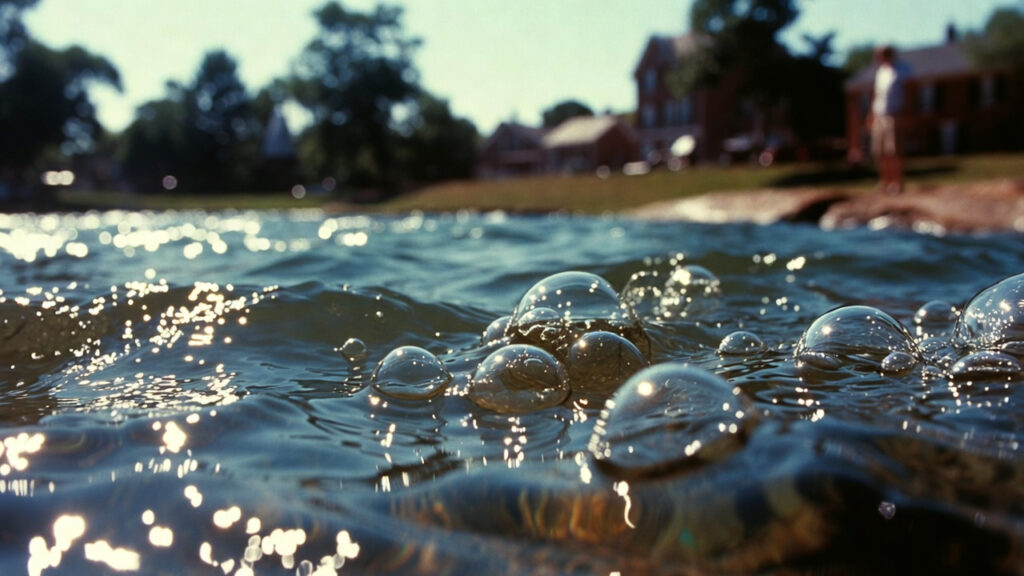
In the town of Boiling Springs, there’s a lake that looks like it’s boiling.
But it’s not hot. It’s cold.
Children’s Lake sits over a powerful natural spring that pushes thousands of gallons of water and gasses up from underground every minute.
The force churns the surface nonstop, making it look like the lake is bubbling like a pot.
Stand there and your brain insists it must be scalding…but the water is crystal-clear and cool.
The town was named for it, early settlers saw the churning water and assumed it was boiling.
Fact 32: The Fake Lakes That Fooled Pennsylvania for Decades
Here’s a secret: most of Pennsylvania’s beautiful lakes are totally fake.
That scenic mountain lake? Man-made. That peaceful fishing spot? Also man-made.
Pennsylvania has very few natural lakes because the glaciers that carved lakes across much of the northern U.S. didn’t extend far enough south to create lake basins across most of the state.
So humans made their own.
Reservoirs like Raystown Lake, Lake Wallenpaupack, and Allegheny Reservoir were created by damming rivers, for power, flood control, and recreation.
And honestly? They did a great job. These places are so scenic and established that people assume they’ve been there forever.
But many are less than a century old.
It’s the ultimate landscape catfish: beautiful, convincing…and totally artificial.
Fact 31: The 16-Acre Sea of Boulders
Deep in Hickory Run State Park, the forest suddenly ends.
And in its place? A 16-acre field of nothing but boulders.
No dirt. No grass. No trees. Just thousands of rocks piled together like a giant dumped out a box of gravel.
This is the Hickory Run Boulder Field, formed at the end of the last Ice Age.
Glaciers covered the area, and when they melted, freeze-thaw cycles broke rock into the ankle-breaking chaos you see today.
Walking across it feels alien. Like the ground just…stopped existing.
NASA has used similar boulder fields to test Mars rover concepts, because it really does look like a broken planet.
Fact 30: The River That Sliced a Mountain in Half
Water doesn’t care about your mountains. And nowhere is that more obvious than the Delaware Water Gap.
Picture this: a mountain stands in the way of a river.
Normally the river would go around it, right? Not the Delaware River.
This thing looked at Kittatinny Mountain and said, “I’m going through.”
And it did.
The Delaware Water Gap is a mile-wide gorge where the river carved straight through the mountain, sheer cliffs rising about 1,200 feet on either side.
It’s one of the most dramatic natural landmarks on the East Coast, and it’s basically the river refusing to take a detour.
Geologists debate how it happened. Some think the river was there first and the mountain rose around it,forcing the water to cut down to keep its course.
Others think the river carved through as the land shifted.
Either way, the result is the same: a mountain got bisected by water…and now you can drive right through it.
Fact 29: The Pennsylvania Rocks That Ring Like Bells When Struck
In Bucks County, there’s a boulder field where the rocks make music.
At Ringing Rocks Park, hit certain stones with a hammer and they ring, clear, bell-like tones that echo through the woods like a natural xylophone.
The rocks are diabase, a type of volcanic rock.
But not all diabase rings. Only these particular boulders, in this particular field.
And here’s the kicker: people say if you take one home, it goes silent.
Visitors bring hammers and mallets just to play them. Different stones produce different pitches, so you can tap out actual melodies.
It’s weird. It’s iconic. And it’s one of those Pennsylvania things that makes you stop and go…how is this real?
Fact 28: The Pennsylvania Pothole Big Enough to Swallow a Truck
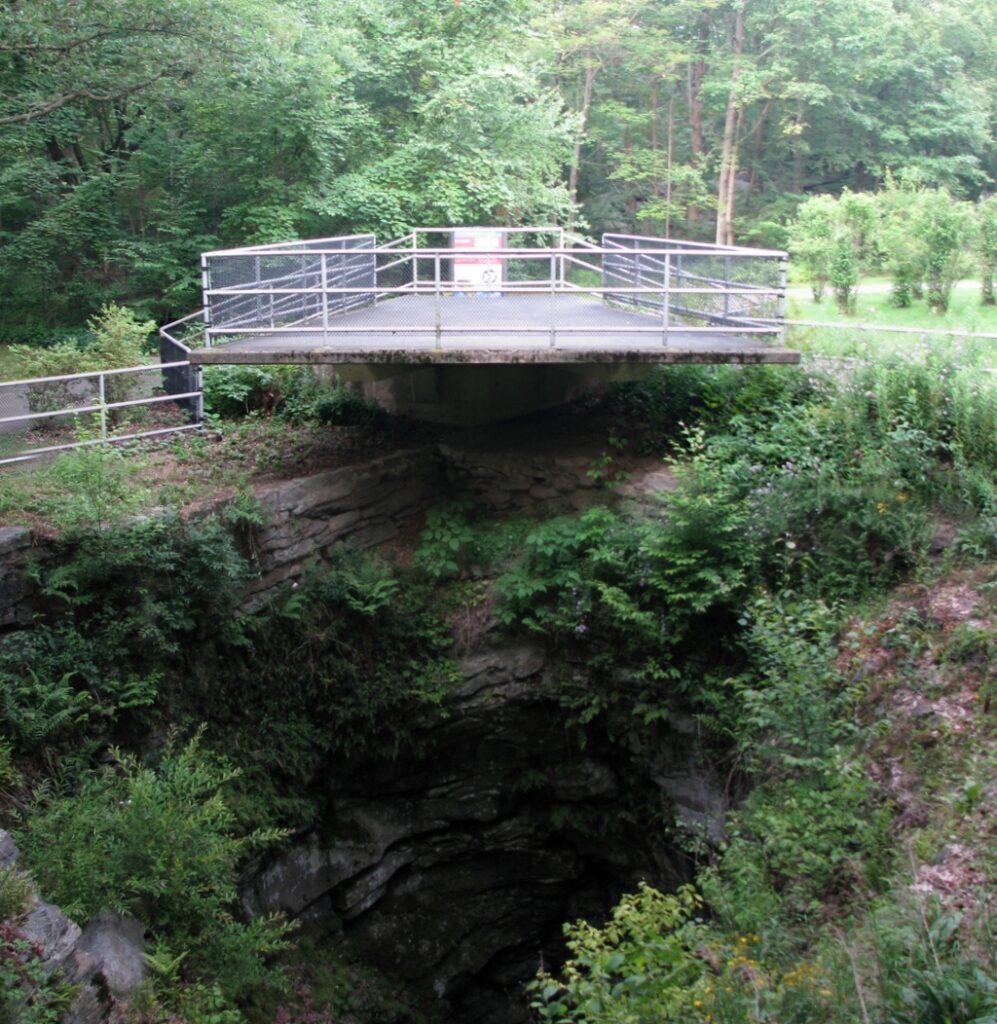
Outside Scranton, there’s a hole so big you could park a truck inside it and still have room left over.
It’s called the Archbald Pothole, but calling it a “pothole” is like calling the Grand Canyon a ditch.
This thing drops 38 feet into bedrock and spans 42 feet across, making it one of the largest known glacial potholes on Earth.
It formed during the last Ice Age when glacial meltwater created a violent whirlpool.
The swirling water carried rocks that acted like drill bits, grinding down into solid bedrock over time.
Coal miners discovered it in 1884 while digging nearby, just a massive, cylindrical hole that looked impossible.
Now it’s a state park, preserved as proof of what water can do when it’s angry…and patient.
Fact 27: The Maze of Over 1,100 Hidden Caves
Beneath Pennsylvania’s surface is a secret world.
The state has over 1,100 documented caves, and experts believe there are thousands more.
Some are massive underground networks, chambers, rivers, formations that look like fantasy scenery.
Laurel Caverns, the largest cave in Pennsylvania, has over three miles of mapped passages and drops around 400 feet below the surface.
Most were carved by water dissolving limestone over millions of years, leaving tunnels, stalactites, stalagmites, and underground streams.
Some are tourist-friendly.
Others are wild caves for experienced spelunkers willing to crawl through tight spaces and wade through underground water.
And some haven’t been fully explored at all.
Pennsylvania’s underground is just as complex as its surface, maybe more.
Fact 26: The Ice Mine That Defies Seasons
There’s a place in Pennsylvania where winter happens in summer.
The Coudersport Ice Mine is a small cave where ice forms during warm months and melts in winter.
Yes, backwards.
In summer, you can walk in and find ice clinging to the walls. In winter, when everything outside is frozen, the cave is often ice-free.
The leading theory is that cold air gets trapped inside during winter, then releases slowly through summer, keeping the cave below freezing long after it “shouldn’t” be.
But the exact mechanics still aren’t perfectly understood.
It’s nature’s backwards freezer.
Fact 25: The Pennsylvania Park Where the Night Sky Still Exists
Light pollution has stolen the stars from most of America.
But not from Cherry Springs State Park.
Located in remote Potter County, Cherry Springs is one of the best places in the eastern U.S. to see the night sky.
On a clear night, the Milky Way shows up so vividly it looks fake.
The park is designated a Gold-Level Dark Sky Park by the International Dark-Sky Association, meaning extremely low light pollution.
Astronomers travel from all over to set up telescopes here.
On busy nights, people line the viewing field on blankets, staring up at a sky that looks like it did centuries ago.
It’s humbling. And once you see it, you can’t unsee how much the modern world has taken away.
Fact 24: The Slimy Pennsylvania Creature Locals Call the “Allegheny Alligator”
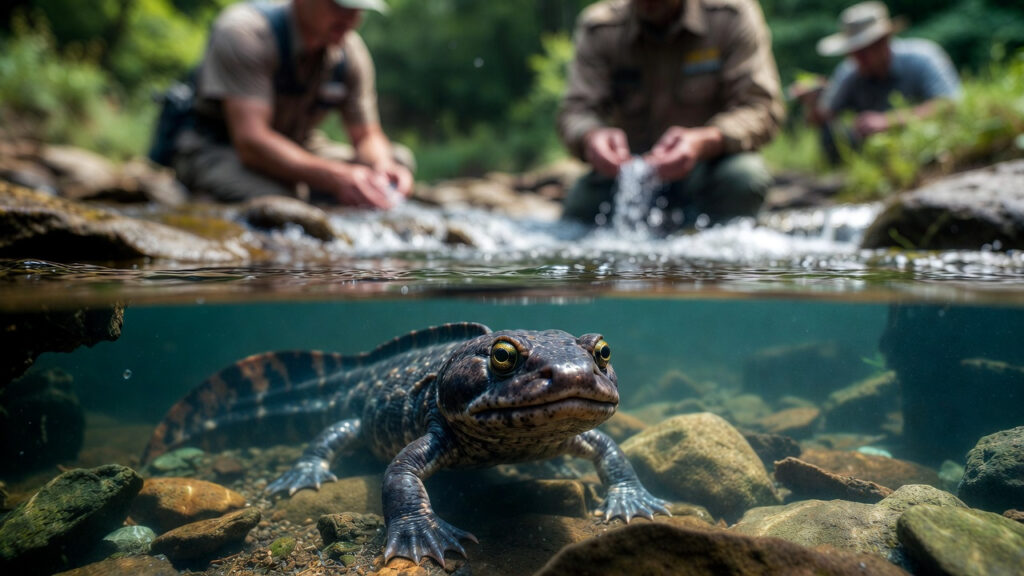
Pennsylvania is home to one of the weirdest, ugliest, most wonderful creatures in North America: the hellbender salamander.
Locals call it the “snot otter” or the “Allegheny alligator,” and both names somehow fit.
It can grow up to two feet long, making it one of the largest salamanders in the world.
Hellbenders live in cold, clean, fast-moving streams.
They breathe through their wrinkled skin, which is exactly why they look like a slimy pancake with legs.
They’re also ancient, around for millions of years, barely changed.
But now they’re endangered due to pollution, habitat loss, and disease.
Pennsylvania has conservation efforts underway, including breeding programs and stream restoration.
So yeah, they’re ugly.
But they’re Pennsylvania’s ugly, and “snot otter” earns instant respect.
Fact 23: Ghost Ships in Lake Erie
Pennsylvania’s northern border includes Lake Erie, and beneath those waters lies a graveyard.
Hundreds of ships have sunk in Lake Erie over the centuries, storms, collisions, fires, ice. Some are recent. Some date back to the 1800s.
And because cold freshwater preserves wrecks well, many are still down there, eerily intact.
Divers explore them regularly: schooners, steamers, freighters frozen in time.
Some still have cargo. Some have cabins where you can see tools and personal items left behind.
Lake Erie is beautiful on the surface.
But underneath, it’s a museum of maritime tragedy.
Fact 22: The Abandoned Pennsylvania Highway Left to Decay in Plain Sight
There’s a 13-mile stretch of highway in Pennsylvania that was just…abandoned.
The Pennsylvania Turnpike opened in 1940, one of America’s first superhighways. But in 1968, a section was bypassed when a new route was built.
The old road – tunnels, overpasses, lanes – was simply left behind.
No demolition. No repurposing. Just abandoned.
Now it’s one of the coolest and creepiest places in the state. You can walk or bike down a highway frozen in time.
The tunnels are pitch black. Graffiti covers the walls. Plants crack through the pavement.
It’s proof that even infrastructure isn’t permanent.
When it’s over…the forest moves back in.
Fact 21: The Bridge a Tornado Ripped Out of Pennsylvania and Dropped Into a Valley
The Kinzua Bridge was once a marvel, built in 1882, 301 feet high and over 2,000 feet long.
For more than a century, trains crossed it, hauling coal and freight over the valley below.
Then, in 2003, a tornado tore through.
The bridge didn’t stand a chance.
The storm shredded iron and hurled massive sections into the valley like toys. When it was over, only part of the structure remained.
Instead of rebuilding it, Pennsylvania turned the ruins into a monument.
Now you can walk out onto a viewing platform at the edge and look down at the twisted wreckage below.
It’s beautiful. It’s eerie.
A reminder that no matter how strong we build…nature can still erase it in minutes.
Fact 20: The Perfect Geometric Shape Hiding in Pennsylvania’s Border
Pennsylvania’s border with Delaware includes one of the strangest boundaries in the U.S.: a perfect 12-mile circle.
Seriously, put a compass point in New Castle, Delaware, draw a circle 12 miles out, and that’s the border.
It dates back to the 1680s and was used to define land grants around the courthouse in New Castle.
Surveying it back then was a nightmare, trying to measure a perfect circle through forests and swamps using 1700s tools.
But they did it.
Fact 19: The Flood That Erased a Pennsylvania Town in Minutes
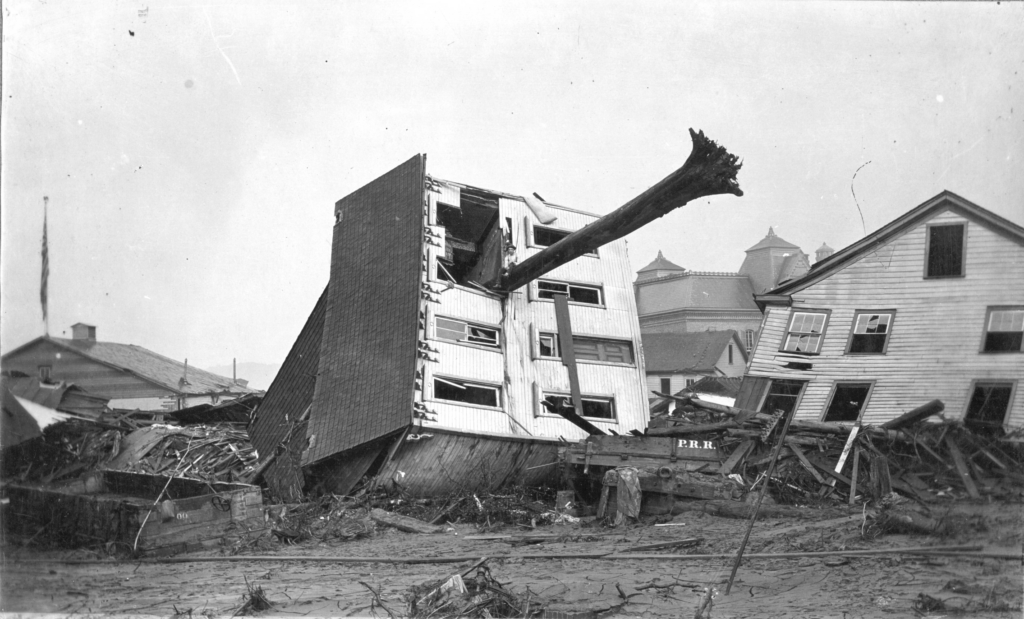
May 31, 1889. Johnstown, Pennsylvania.
Heavy rains had been falling for days, and the poorly maintained South Fork Dam was straining under pressure.
Then it broke.
Twenty million tons of water roared down the valley at about 40 miles per hour, obliterating everything in its path.
When it hit Johnstown, more than 2,200 people died in minutes.
Debris piled up 40 feet high in places. Bodies were found miles away, some never identified.
The Johnstown Flood became one of the first major disasters to receive national media attention.
Relief efforts poured in, and Clara Barton and the Red Cross arrived, one of the organization’s first major disaster responses.
Johnstown rebuilt.
But it never forgot.
Fact 18: The Town That’s Been on Fire for Over 60 Years
Centralia, Pennsylvania is a ghost town.
Not because of a recession.
Because the ground is literally on fire.
In 1962, a coal seam beneath the town caught fire, likely from a landfill burn. Normally, coal fires can burn out.
But this one spread into a massive network of mines…and it’s still burning today.
Smoke rises from cracks. The ground gets hot. Roads buckle and collapse. Carbon monoxide seeps up from below.
The government tried everything, trenches, water, smothering it. Nothing worked.
In 1984, they gave up and relocated most of the town. Homes were demolished. Streets were abandoned.
A small number of residents refused to leave.
And the fire could burn for another 250 years…maybe longer.
Centralia is a modern Pompeii, consumed not by a volcano, but by a fire that refuses to die.
Fact 17: The “Dutch” Pennsylvanians Who Aren’t Dutch at All
German immigrants settled in Pennsylvania in the 1700s, bringing their language, culture, and traditions.
Today, we call them the Pennsylvania Dutch.
But they’re not Dutch.
They’re German.
The confusion comes from the word “Deutsch,” meaning “German.”
English speakers heard “Deutsch,” turned it into “Dutch,” and the name stuck.
They brought huge cultural influence: hex signs on barns, shoofly pie, fastnachts, folk art, and distinctive architecture.
They also brought birch beer, root beer’s underrated cousin.
Many communities still speak Pennsylvania Dutch, a German dialect that’s survived for over 300 years in isolated pockets of the state.
So no, they’re not Dutch.
But they’re deeply Pennsylvanian, and their influence is everywhere.
Fact 16: The Most Haunted City in America
Philadelphia has a lot of claims to fame.
But here’s one you might not know: Philly is often said to have one of the highest densities of haunted locations in the U.S.
Eastern State Penitentiary. The Betsy Ross House. Independence Hall.
Ben Franklin’s grave. Old forts, alleyways, colonial buildings layered with history, and a lot of it violent.
Ghost tours run nightly, taking groups through narrow streets and centuries-old buildings while guides recount murders, executions, and tragedies.
Whether you believe in ghosts or not, there’s something eerie about standing in a 300-year-old building at midnight hearing what happened inside it.
Philadelphia wears its hauntings like a badge.
So if you feel a chill while walking those streets?
You’re not alone.
Fact 15: The Pennsylvania City That was America’s Capital Before D.C.
Before Washington, D.C. became the permanent capital, Philadelphia held that title.
From 1790 to 1800, Congress met there. The President lived there. It was the political heart of the new United States.
Philadelphia was already the largest city in the country, a major center of culture, commerce, and ideas.
Hosting the capital made it even more important.
But then came the compromise: Hamilton wanted the federal government to assume state debts; Jefferson and Madison wanted a capital closer to the South.
The deal was made, and by 1800 the government moved to the Potomac.
Philadelphia lost the title.
But it never lost the history.
Fact 14: The Pennsylvania City With More Bridges Than Venice
Venice is famous for bridges.
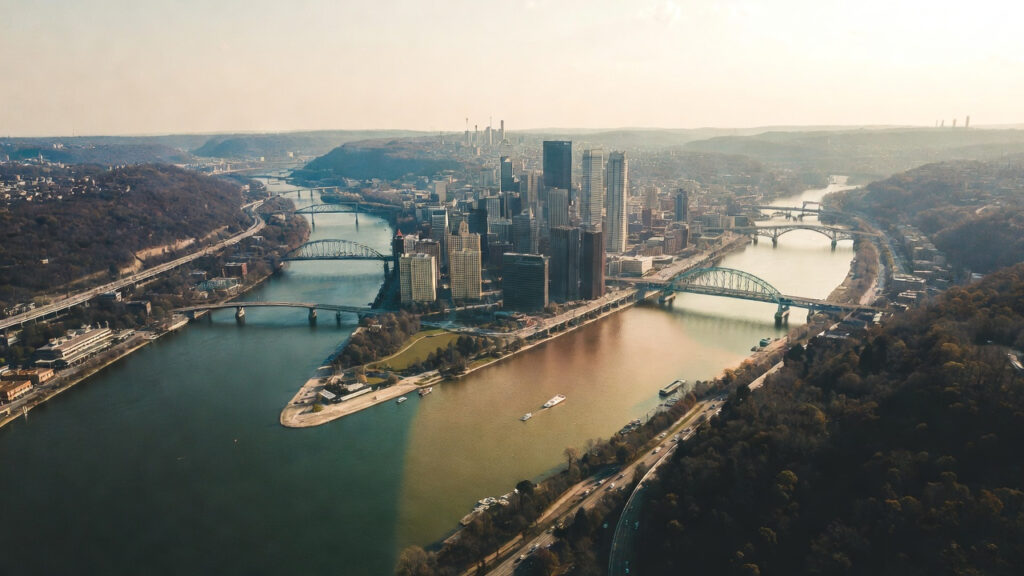
But here’s the twist: Pittsburgh has more bridges than Venice.
Pittsburgh has over 440 bridges, more than any other city in the world.
Why? Geography.
The city sits where the Allegheny and Monongahela meet to form the Ohio, carved up by rivers and steep hills.
Bridges weren’t optional. They were survival.
Some are iconic engineering pieces that define the skyline. Others are simple structures people cross daily without thinking.
But together, they make Pittsburgh one of the most uniquely built cities in America.
Fact 13: The Pennsylvania Museum Dedicated Entirely to Human Hair
There are weird museums…and then there was Pennsylvania’s Hair Museum.
It was exactly what it sounds like: a museum dedicated entirely to human hair, historical hair, famous hair, hair art, hair preserved behind glass.
The collection allegedly included locks from Napoleon, Thomas Jefferson, George Washington, and more.
Some hair was woven into Victorian jewelry, bracelets, rings, framed pieces, keepsakes from loved ones before photography was common.
It’s creepy.
But also a fascinating time capsule of how people once memorialized the dead and the famous.
The museum eventually closed, but for a time, Pennsylvania had one of the strangest collections on Earth.
A room full of hair from people dead for 200 years.
Try unseeing that.
Fact 12: The Pennsylvania Oil Well That Changed the Modern World
Most people think of Texas when it comes to oil—but the modern oil industry actually began in Pennsylvania.
In 1859, Edwin Drake drilled the first commercial oil well in Titusville.
Before that, oil was mostly a curiosity, something that seeped from the ground and got used in small ways.
Drake’s success changed everything. It proved oil could be extracted reliably and profitably.
Western Pennsylvania boomed. Towns exploded overnight. Fortunes were made, and lost.
This was the birth of the petroleum industry, powering cars, planes, factories, plastics, and modern economies.
Every time you fill your gas tank, you’re participating in a story that started in Titusville.
Fact 11: The Small Town That Grows Half of America’s Mushrooms
Which state produces the most mushrooms in America?
Pennsylvania. And it’s not close.
Kennett Square grows over 50% of the mushrooms consumed in the United States.
Why? Perfect conditions: cool, damp, rich soil, ideal for fungus.
Over time, Kennett Square became the epicenter of American mushroom production.
They even have a Mushroom Festival, with mushroom everything.
Soup, burgers, stuffed mushrooms…even mushroom ice cream.
It’s a weird claim to fame.
But it feeds the nation.
So next time you toss mushrooms on a pizza, there’s a good chance they came from Pennsylvania.
Fact 10: The Pennsylvania Nuclear Plant That Ended America’s Atomic Future
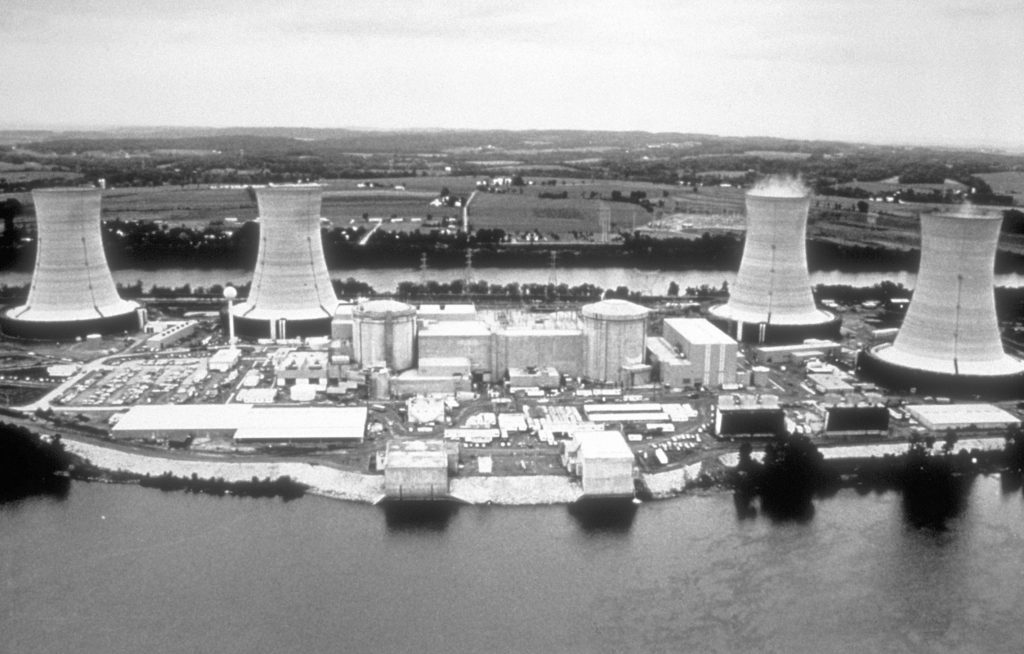
March 28, 1979. Three Mile Island, near Harrisburg.
The worst nuclear accident in U.S. history.
A chain of mechanical failures and human errors caused a partial meltdown.
Coolant was lost, temperatures spiked, and radioactive gases were released.
Panic spread. Evacuations began. The entire country watched as engineers fought to stabilize the reactor.
The containment held, and most studies conclude the health effects were minimal, though not everyone agrees.
But the psychological and political impact was massive.
Three Mile Island effectively froze the expansion of nuclear power in the U.S.
Dozens of planned reactors were canceled. Public trust collapsed.
The damaged reactor was shut down permanently, leaving the cooling towers as a reminder of how close things came.
It didn’t destroy a city.
But it killed the nuclear dream.
Fact 9: The Deadliest Tornado Outbreak of the 1980s
May 31, 1985. Pennsylvania, Ohio, and surrounding areas.
One of the worst tornado outbreaks in U.S. history.
A massive F-4 tornado and numerous smaller ones tore across the region, killing 89 people, injuring over 1,000, and causing more than $600 million in damage.
The main tornado carved a path over 60 miles long. Neighborhoods were leveled. Schools and businesses were ripped apart.
This wasn’t “tornado country,” and people weren’t ready.
Warning systems weren’t what they are today. Some people didn’t even know it was coming until it hit.
The disaster led to improvements in forecasting and warning systems.
But for communities in its path, the scars lasted for years.
Fact 8: The Only Town in Pennsylvania
Here’s a fact that sounds fake but is true: Pennsylvania has only one town.
Just one.
That town is Bloomsburg.
Everywhere else is classified as a city, borough, or township. Pennsylvania’s municipal system is oddly specific, and “town” is the rarest designation of all.
Bloomsburg earned the title through a special legislative act in 1870, and it’s still the only one.
So if someone says they’re from a “town” in Pennsylvania…they’re either from Bloomsburg, or they’re wrong.
Fact 7: The Oldest Site of Human Habitation in North America
Meadowcroft Rockshelter in Washington County, Pennsylvania is one of the oldest known sites of human habitation in North America.
Evidence suggests humans were there around 16,000 years ago, possibly earlier.
That’s Pre-Clovis. That’s ancient.
Meadowcroft is a rock overhang that preserved layers of human activity over thousands of years, stone tools, fire pits, animal bones.
For decades, the dating was controversial because it challenged accepted theories about when humans arrived in the Americas.
Over time, evidence strengthened its importance as a key piece of the human migration story.
Standing there is like standing at the beginning of America’s story, not the 1776 version.
The real beginning.
Fact 6: The Oldest Golf Course in America
Golf might not be the first thing you associate with Pennsylvania, but the state holds a piece of American golf history.
Foxburg Country Club in Clarion County is the oldest continually used golf course in the United States.
It opened in 1887, when golf was still seen as a weird British import.
Foxburg isn’t flashy. It’s not Augusta. But it’s real, and it’s still in use.
Pennsylvania doesn’t just preserve history in museums.
Sometimes, history is still functioning.
Sometimes…you can walk right onto it and play 18 holes.
Fact 5: The Pennsylvania Settlers Who Declared Independence – by Accident
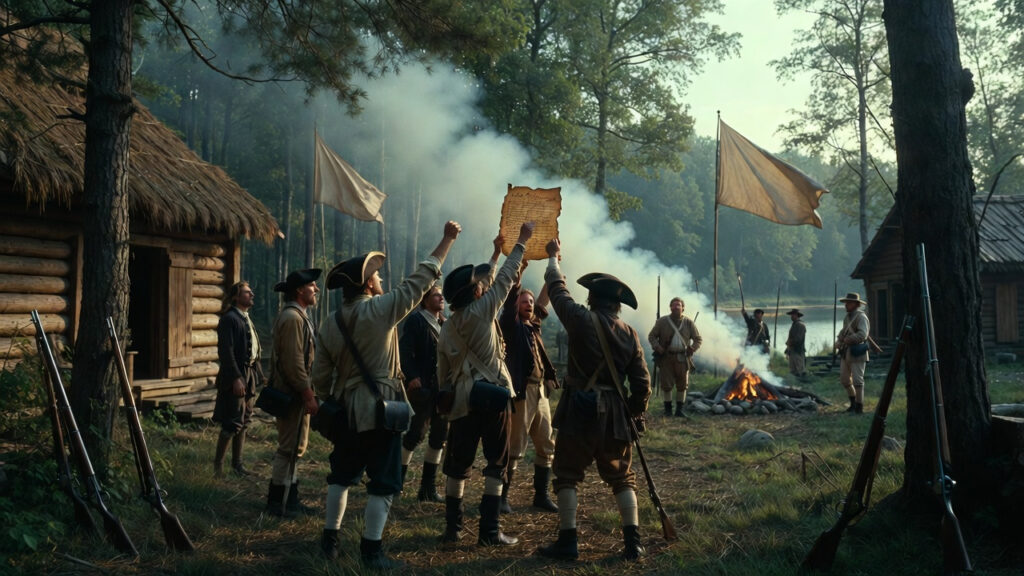
July 4, 1776. Philadelphia. The Declaration of Independence is signed.
But on that exact same day, a group of illegal settlers near Jersey Shore, Pennsylvania declared their own independence from Great Britain.
They had no idea what happened in Philadelphia. No fast news. No communication. They just independently decided: “Yeah, we’re done.”
These were the Fair Play Men, settlers in disputed territory who created their own government under an elm tree called the Tiadaghton Elm.
When they eventually learned the Continental Congress had declared independence that same day, it felt like fate.
For a moment, they were a micro-republic in the wilderness that accidentally matched the most famous date in American history.
Pennsylvania was so ready to be done with Britain that even people who didn’t know about the Revolution were starting their own.
Fact 4: The 13,000-Year-Old Ice Age Plant Still Alive in Pennsylvania
In Perry County, along Route 322, there’s a plant older than civilization.
The Losh Run Box Huckleberry is estimated to be 13,000 years old—one of the oldest living organisms on Earth.
It was alive during the Ice Age. It was here when mammoths roamed. It predates the pyramids, writing, and agriculture.
Box huckleberries spread through underground rhizomes, so what looks like separate plants is actually one organism cloning itself across the forest floor.
This colony covers around 1.5 acres and has been growing in the same spot for 130 centuries.
In the 1970s, Route 322 was widened and construction nearly killed it, cutting it in half.
But it survived.
Fact 3: The Stadium That Becomes Pennsylvania’s Fourth-Largest City Every Saturday
Penn State’s Beaver Stadium is one of the largest stadiums on Earth, holding 106,572 people.
When it’s full, there are more people inside it than live in all but three cities in Pennsylvania.
Only Philadelphia, Pittsburgh, and Allentown have bigger populations.
That means on a Saturday during football season, a temporary city forms in State College, bigger than Erie, Reading, and Scranton.
And then a few hours later, it vanishes.
The roar is so loud it can register on seismographs. Visiting teams say it’s one of the most intimidating environments in college football.
For a few hours, it becomes Pennsylvania’s fourth-largest “city,” united by a single goal: be as loud as humanly possible.
Fact 2: Pennsylvania’s Forgotten Statue of Liberty
Everyone knows the Statue of Liberty in New York.
But Pennsylvania has its own Lady Liberty.
And she’s standing in the middle of a river.
Near Harrisburg, a replica Statue of Liberty rises from the Susquehanna on a small island, about one-tenth the size of the original, but still striking when you’re not expecting it.
It was placed there in 1986 by local businessman Gene Stilp as a protest symbol, and it stayed.
Floods, storms, ice…she’s been knocked down by river ice multiple times and rebuilt each time.
Most people driving through have no idea she’s there. You have to know where to look, out on the water, just standing there like it’s totally normal.
Small. Overlooked.
Still shining.
Fact 1: The Tiny Pennsylvania City That was Once the Richest Place on Earth
Here’s a fact that sounds impossible: Titusville, Pennsylvania, a small town most people have never heard of, was once the wealthiest city in the world.
In the 1880s, Titusville sat at the center of the oil boom.
After Drake’s well in 1859, oil fever exploded. Fortunes were made overnight.
For a brief moment, Titusville had more millionaires per capita than anywhere else on Earth. Mansions went up.
Money flowed like crude.
But boom towns are fragile. When production shifted and the easy money moved on, so did the millionaires.
Today, Titusville is quiet, about 5,000 people, with museums and remnants of its boom era.
For a few decades, it stood at the center of the world.
Conclusion
So there you have it.
Pennsylvania in all its weird, wonderful, jaw-dropping glory.
A state with ghost mountains that used to scrape the sky. A river that sliced through solid rock.
A town that’s been on fire for over 60 years. A 13,000-year-old plant. The birthplace of the oil industry. The oldest golf course in America.
A stadium bigger than most cities. And only one town – just one – in the entire state.
Pennsylvania isn’t just history. It’s alive with secrets, contradictions, and stories most people never hear.
It’s a place where the ground hums with ancient fires, rocks sing, gravity seems to break, and humans have been leaving footprints for 16,000 years.
So next time someone mentions Pennsylvania and you think cheesesteaks and the Liberty Bell, remember: there’s a lot more beneath the surface.
Sometimes literally.
If you learned something new, be sure to come back for more deep dives into other states.
And be sure to subscribe to your YouTube channel for more deep dives into the places that make America fascinating.
And if you’re from Pennsylvania, drop a comment and tell us what we missed.
Because if there’s one thing we know for sure, it’s that Pennsylvania always has more stories to tell.